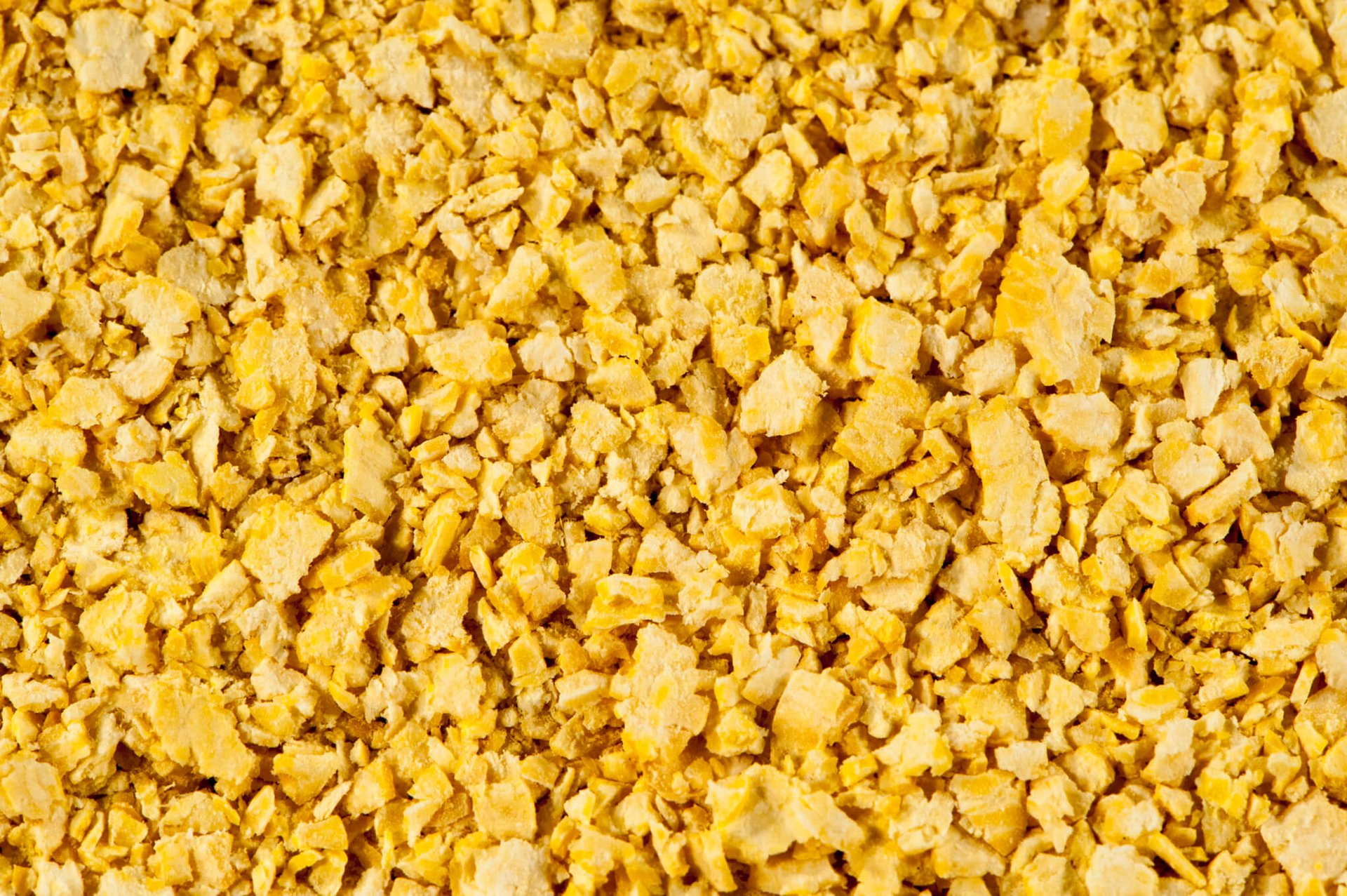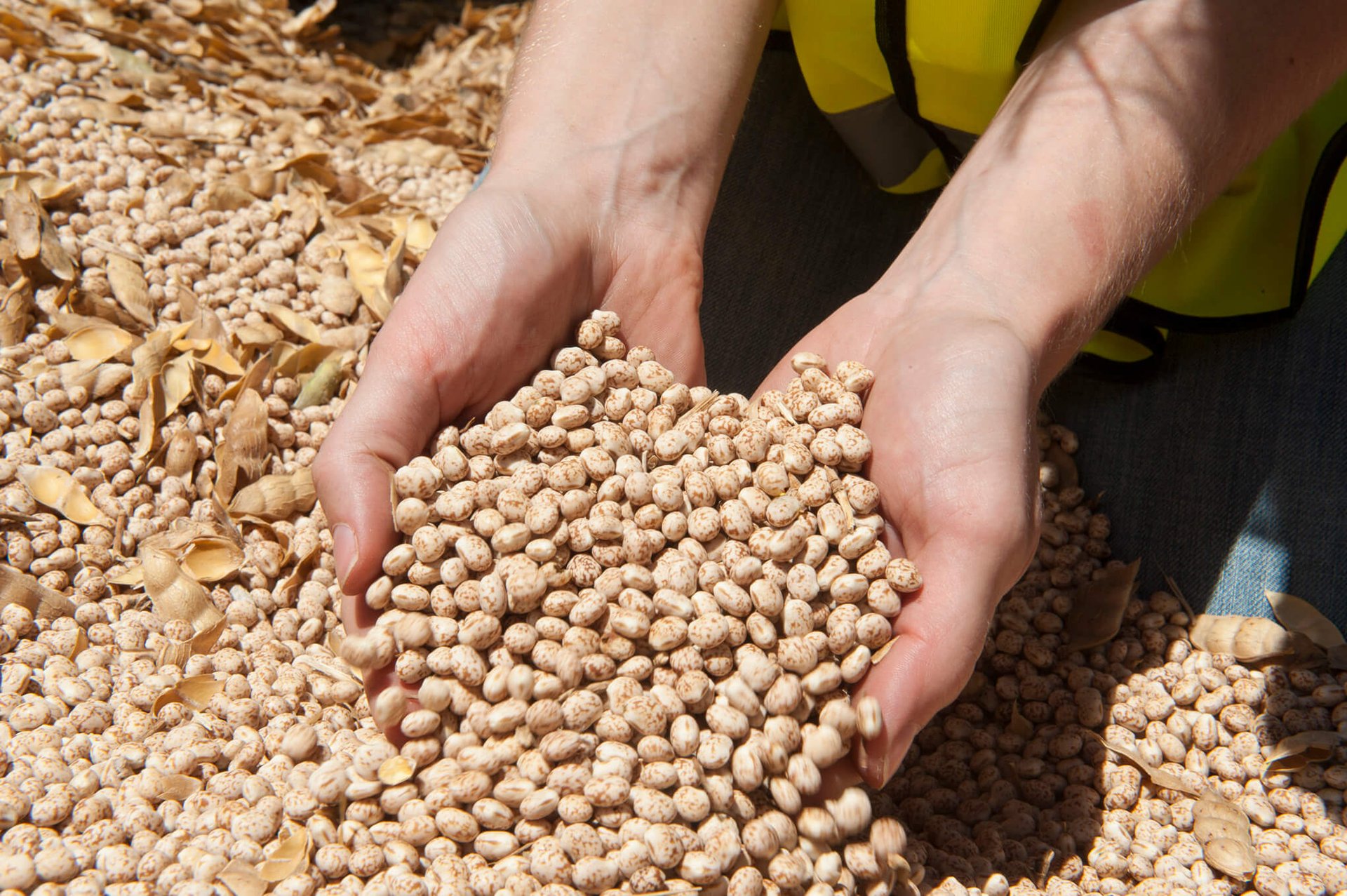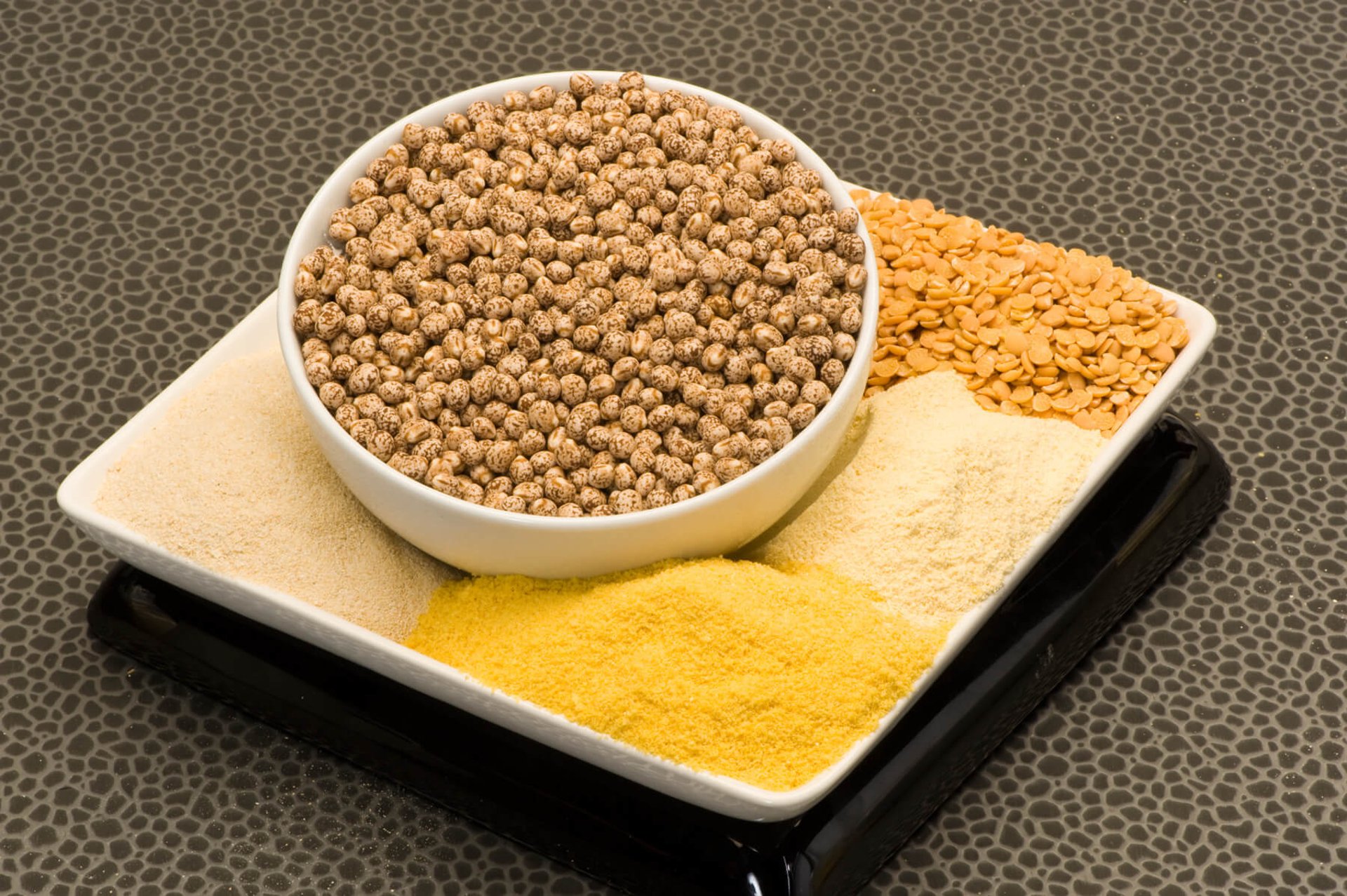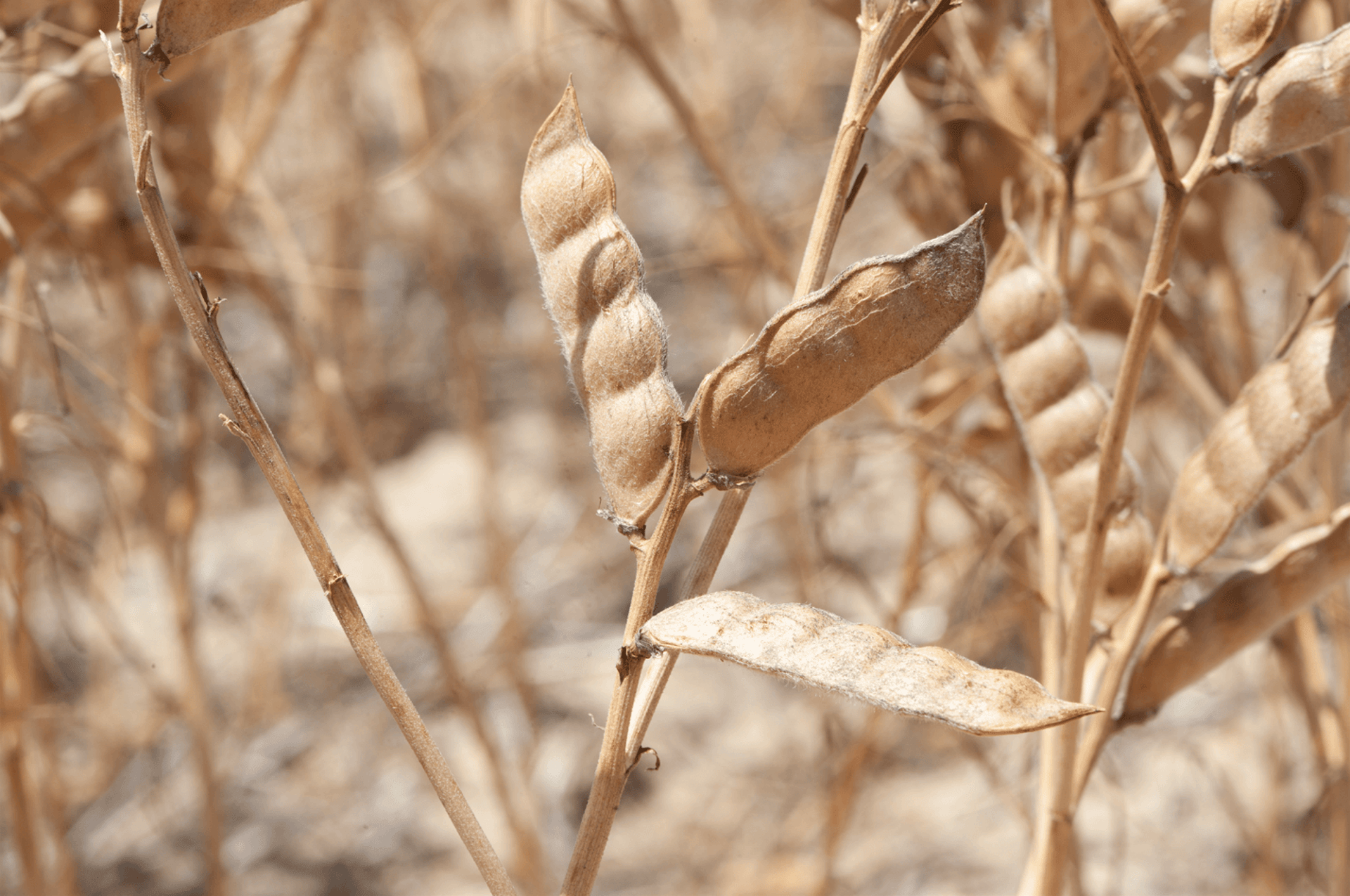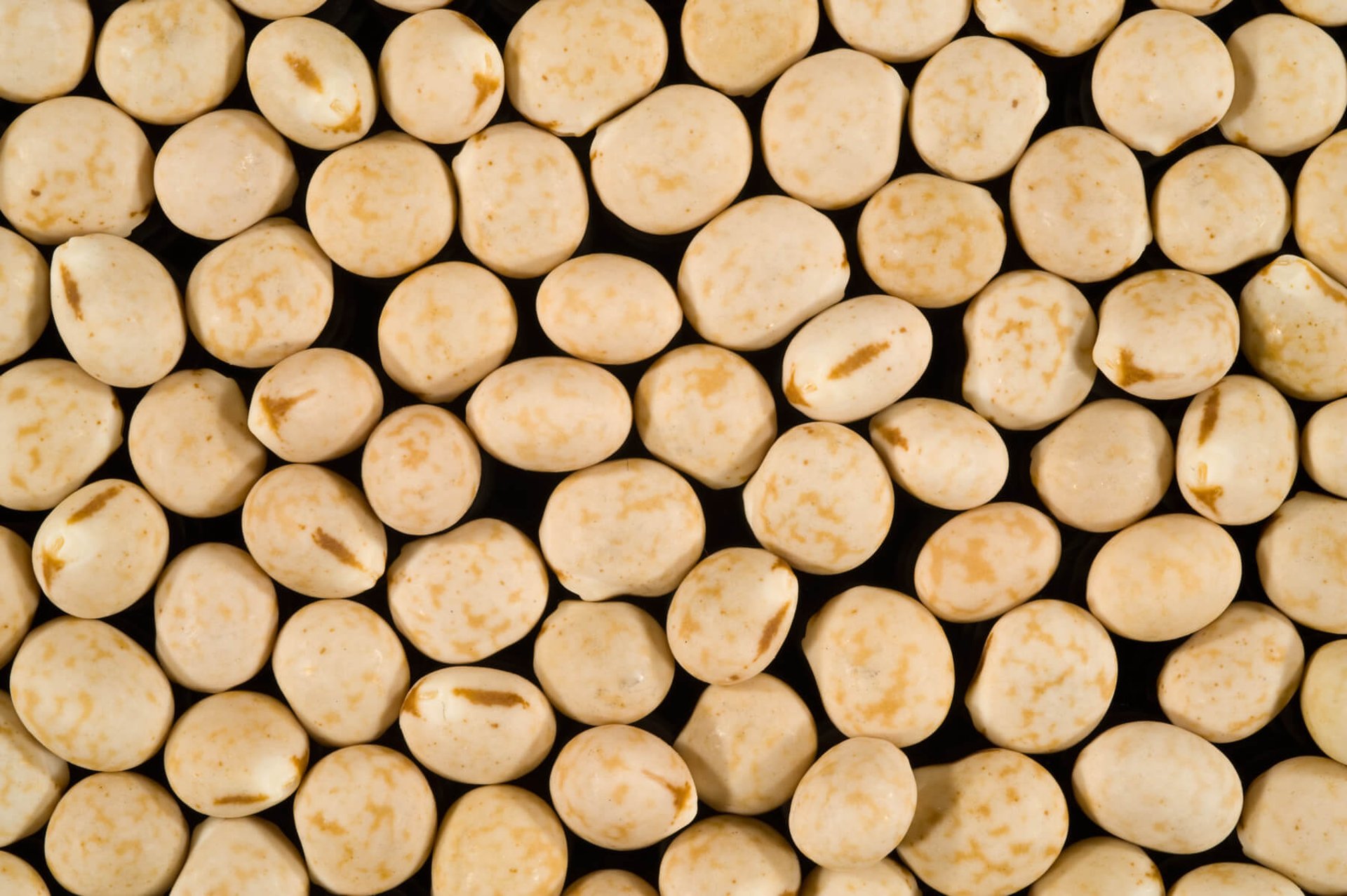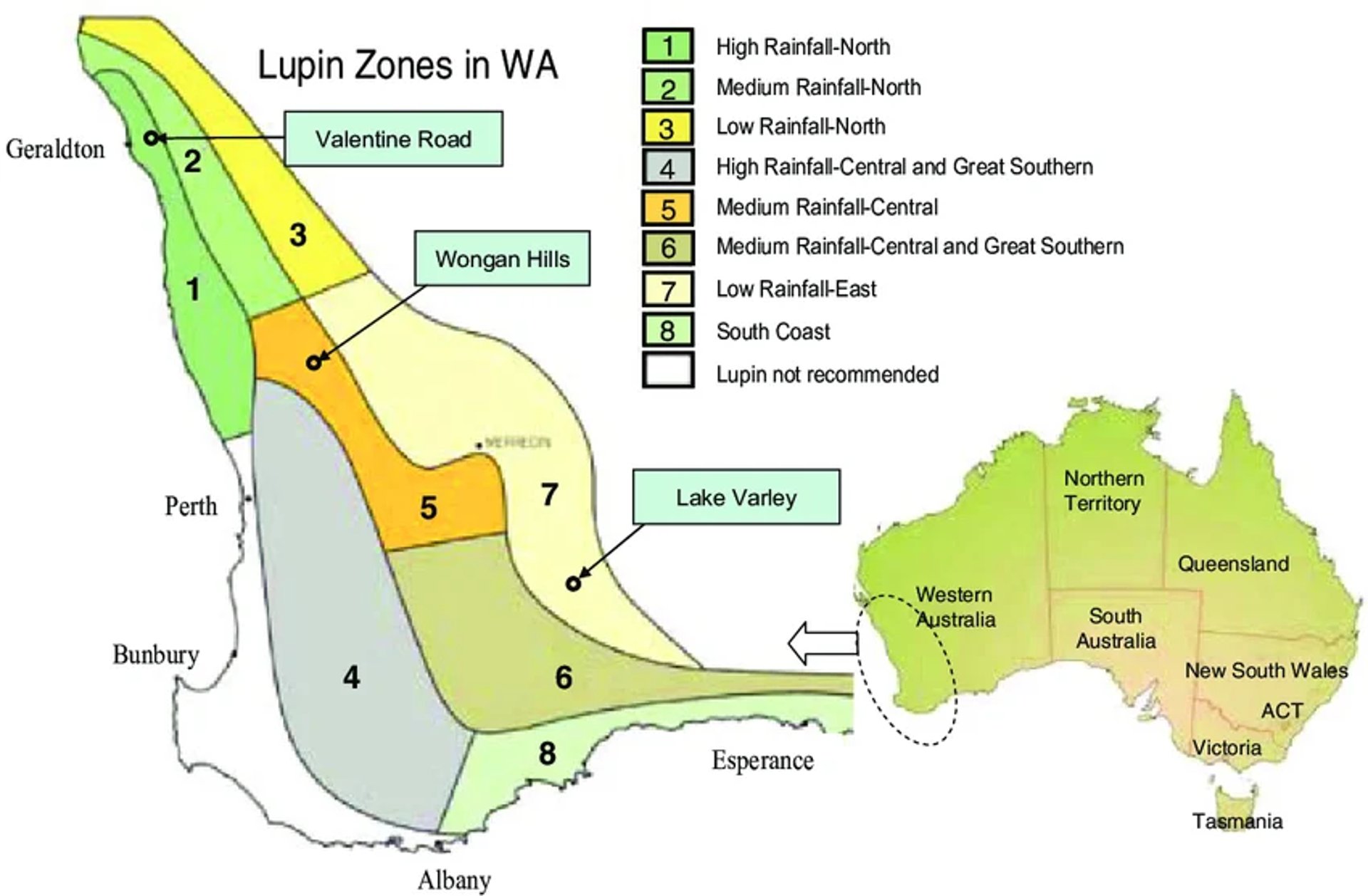

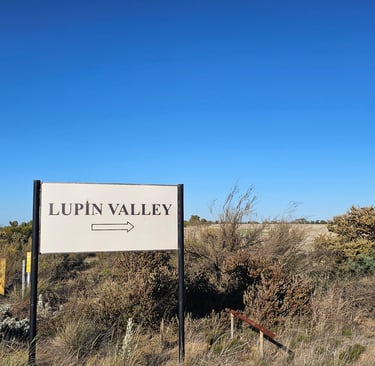
Australia is known as the "Lucky Country," which indeed Australia possess some of the best farmland and productive farmers in the world. In which we source our Lupins primarily from Western Australia, where an unique varietal of Lupin is grown called "Sweet Lupins," also known as "narrow leaf lupins." Possessing less bitter notes or alkaloids, better suited for Swine and alike.
The region is specfically great for Lupin due to its sandy soil with free-draining characteristics, and acidic nature with pH of around 4.5 to 7. Lupin requires adequate moisture in their growth phase from spring to early summer but can get root rot from too much moisture during winter. Crops are harvested in early summer.
In return the crop enriches the soils as a rotational crop - producing natural nitrogen back into the soil with its roots, keeping the region healthy for more agriculture for generations to come.
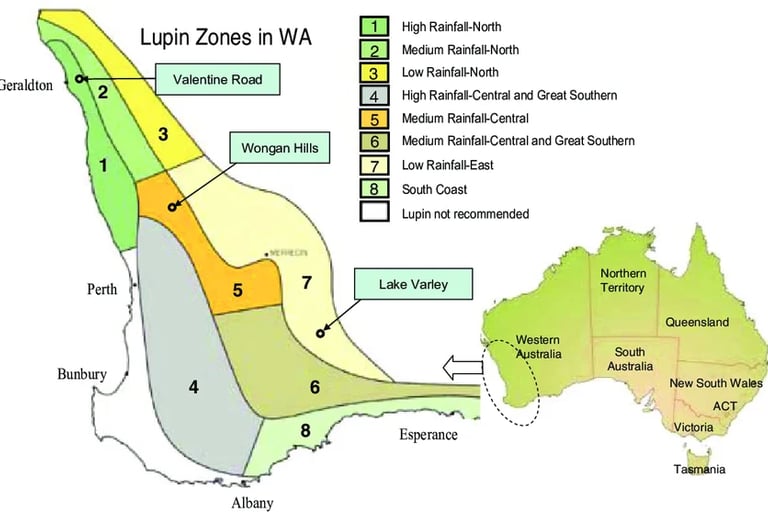
Western Australia is the nation's largest producer and exporter of lupins, and ranks among the top producers globally, producing 875,000 tons in 2022.
To illustrate, Western Australia accounts for 80% or more of national lupin production, followed by South Australia, New South Wales, and Victoria—each contributing less than 10%. However, the latter three primarily cultivate the 'Albus' varietal, which contains higher alkaloid levels.
Other countries incl: Belarus, Chile, Germany, Russia, and Morocco.
However, in recent years the amount of Lupin grown has declined due to lower market prices encouraging a preference for canola and cereal crops

Sweet Lupin is especially great for Swines due to its lower alkaloids, however more importantly Lupin naturally possesses comparable protein than its closest alternative being Soymeal, but with much higher energy & fibre content, making it a strong competitor to Soymeal based feeds, especially with the increasing cost of Soymeal. Sweet Lupins can benefit all feed manufacturers, feedlot operators and alike to its Lupin's natural qualities.
Lupins are a rich source of protein, with 40g of plant protein per 100g. They are also very high in dietary fibre, with 27g per 100g of lupin.
Currently in Asia the biggest importer are Vietnam and Korea. Where the former uses it primarily for Swines and alike, and Korea uses it for all kind of feeds and aquaculture applications.
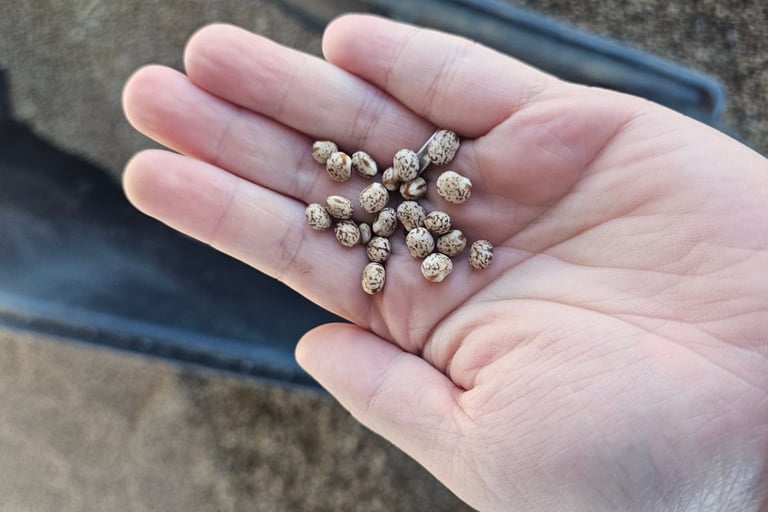
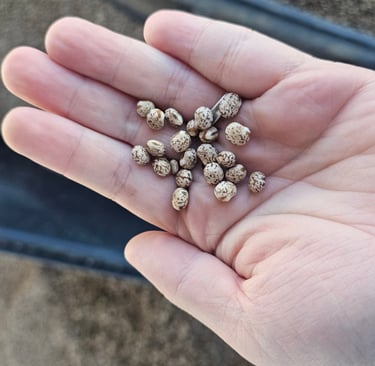
Detailed Specifications
详细说明
Comparison 对比
Useful resources, 有用资源:
Department of Primary Industries and Regional Development
Grains Research & Development Corporation
GIWA: "Australian Sweet Lupin: The Next Superfood? Nutritional Information & Recipes."
GDRC: Lupin Western Region - GrowNotes