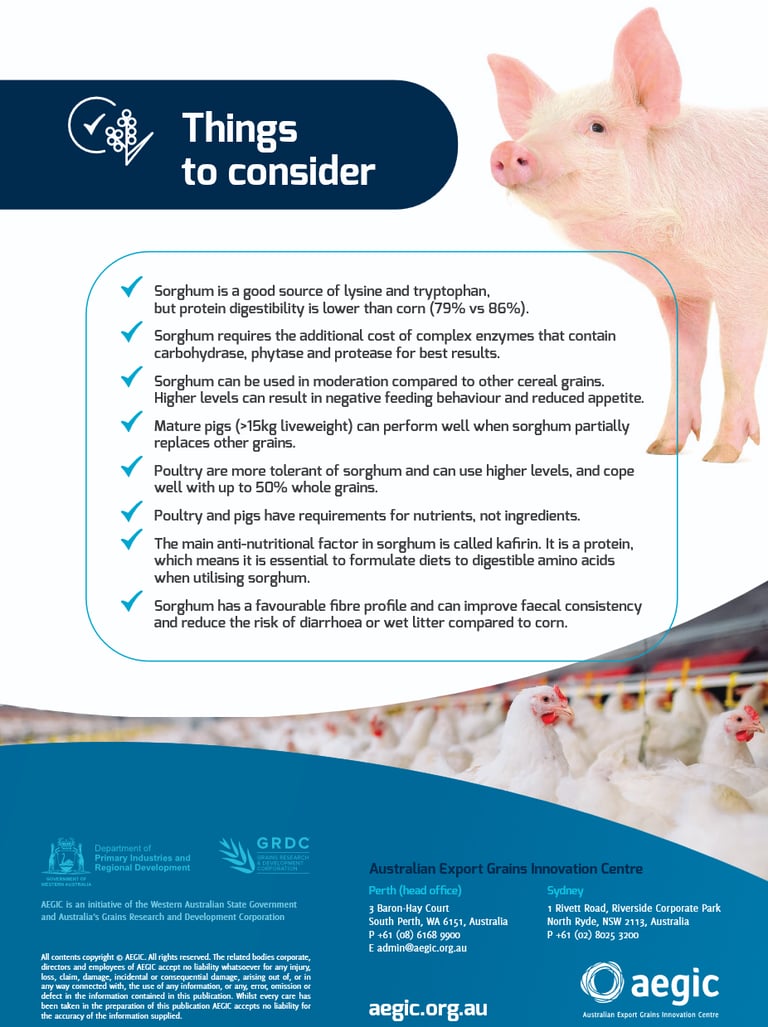

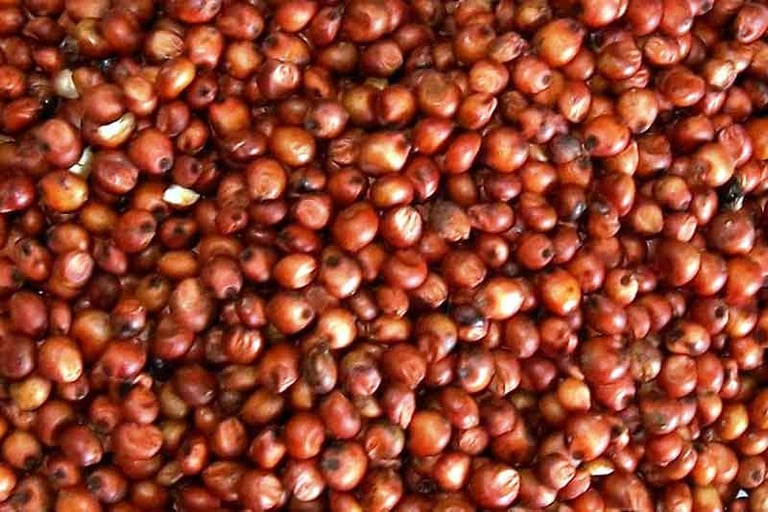
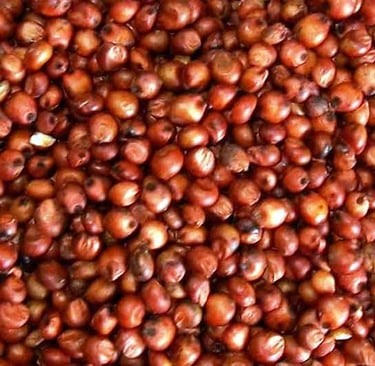
Sorghum is Australia’s largest summer grain crop, predominantly grown in Queensland and northern New South Wales. Cultivated primarily as livestock feed, it is also a highly valued ancient grain and popular gluten-free food source, with export markets driven by surging international demand
Whereby, Australian sorghum is a proven, reliable grain for animal feed It is nutritionally similar to corn but without the yellow pigments. Due to its inherent drought tolerance and short growing season, interest in sorghum is increasing, with red sorghum the main type grown in Australia for animal feed.
Other than being fed to animals, including poultry, it is also used as food in Africa, and alcohol in Baijiu in China.
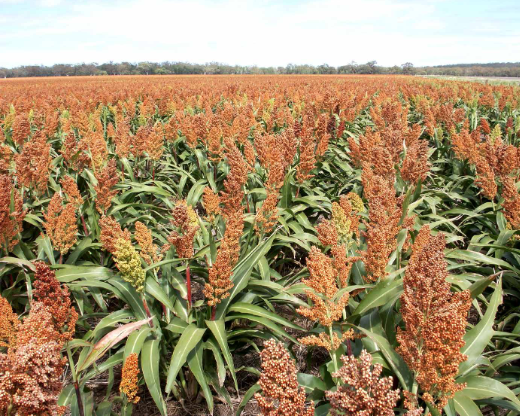
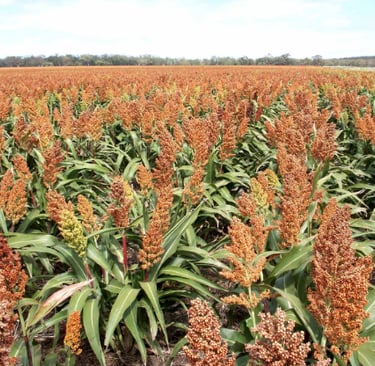
From the grower to the exporter, the Australian sorghum industry is committed to the highest standard in product performance to meet the requirements of international customers. Which, Australian sorghum has low moisture content, with low mycotoxin contamination and long storage viability.
Starch is the main component of, and contributor to, metabolisable energy (ME) in all grain types. Sorghum starch content is typically slightly lower that corn but higher than wheat or barley, commonly around 62% as fed Other countries incl: Belarus, Chile, Germany, Russia, and Morocco.
The nutrient composition and energy value of Australian sorghum is generally less variable than that of other grains. Starch digestibility is lower for sorghum than corn: e.g. it has ideal starch digestibility of 88% compared to 94% for corn. Phenols (in the pigmented seed coat), kafirin (the protein matrix encapsulating the starch granules), and phytate may all contribute to this lower starch digestibility.
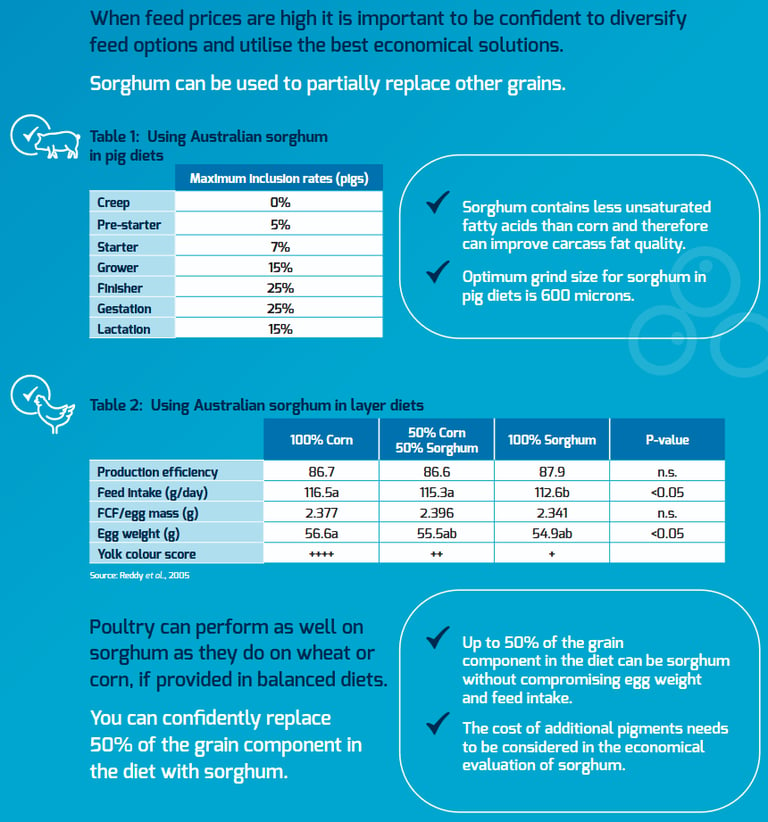
Screenshot, courtesy of AEGIC